👁 37🎧 0📋 0❤ 0
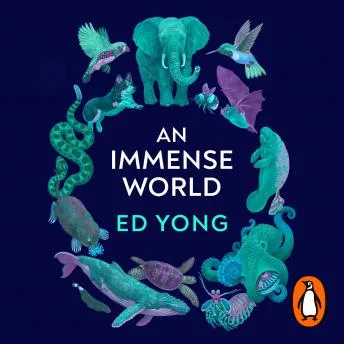
An Immense World: Discover How Animals Perceive the World
by Ed Yong · 14h 17m
Ed Yong borrows the idea of the Umwelt, the perceptual world a species actually inhabits, and spends the book describing worlds that people can only infer. Each chapter takes one channel of sense, from smell and taste to vibration, echo, electricity and magnetism, and shows how far a creature's experience runs from our own. A tick waits for the heat, hair and butyric acid that mean a mammal is near and never registers the plants around it; star-nosed moles read the ground through their noses, sea urchins see with their whole bodies, and some insects hear through their knees. Yong describes frog embryos that hatch early when a snake bites the egg but ignore rain, wind and even an earthquake, and treehoppers that talk through plant stems in vibrations a scientist had to translate with a laser. The argument is that senses come at a cost, so every animal samples a narrow slice of the physical world, and the closing chapter treats light and noise pollution as a theft of other species' sensory space.
AUTHOR
GENRES
Community reviews
Write a reviewNo reviews yet — be the first to write one.
💡 If you liked this, you'll like…
Sign in to suggest an audiobook.No suggestion yet. Know a similar audiobook? Be the first to propose one.