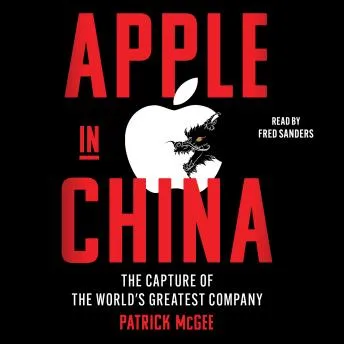
Apple in China: The Capture of the World's Greatest Company
by Patrick McGee · 14h 6m
Patrick McGee's subject is the arrangement that made the iPhone possible and, in his account, helped make modern China. Apple had already tried Ireland, Singapore, Wales, Mexico and South Korea before demand for the iPod exhausted a Taiwanese contractor's capacity around 2003, at which point Foxconn opened plants on the mainland. McGee's central mechanism is a trade in knowledge rather than margin: Apple sent engineers to rewrite suppliers' processes and bought their tooling, while Foxconn's Terry Gou accepted work at little profit because the real payment was the instruction his people received. China's contribution was subsidised land and infrastructure, labour in quantity, and unions that did not bargain, and by 2015 Apple had trained a workforce there larger than California's entire labour force. The second half follows what that bought: the 2013 turn when Beijing began treating Apple as a foreign company to be managed, the Gang of Eight sent to handle it, app removals and the transfer of iCloud data to a state-linked operator in Guizhou. McGee draws on more than two hundred interviews, and his conclusion is that the dependency now runs both ways.