👁 36🎧 0📋 0❤ 0
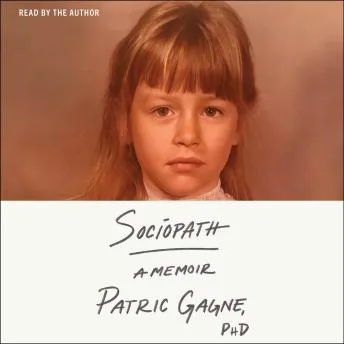
Sociopath: A Memoir
by Patric Gagne · 11h 7m
Patric Gagne opens with herself as a second-grader stabbing a classmate in the head with a pencil, an act she presents not as a tantrum but as the behaviour of a child who felt nothing where other children felt shame. Her argument, developed as she trained in psychology and then as a clinical psychologist, is that sociopathy is not psychopathy: it is closer to an emotional learning disability, in that she had anger and fear but never acquired guilt, embarrassment or empathy, and taught herself to imitate them so as not to be caught out. She describes a pressure building inside her, like a geyser, that pushed her toward trespass, theft and breaking into houses as a way of jolting herself into feeling something. In college she set herself a private code, attending strangers' funerals and donating in their name, stealing cars for joyrides and returning them to owners who could afford the loss. She admits that privilege, a white blonde daughter of a music-industry figure, kept her out of handcuffs, and that she became a convincing liar. The book is advocacy as much as confession, and she concedes she is a flawed messenger for the argument she wants to make.
AUTHOR
Community reviews
Write a reviewNo reviews yet — be the first to write one.
💡 If you liked this, you'll like…
Sign in to suggest an audiobook.No suggestion yet. Know a similar audiobook? Be the first to propose one.