👁 37🎧 0📋 0❤ 0
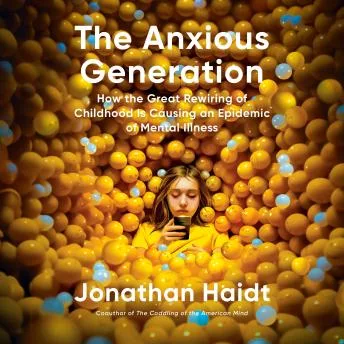
The Anxious Generation
by Jonathan Haidt · 10h 32m
Haidt divides the argument into four parts, from the statistics of the collapse through the long retreat from unsupervised play to the years he calls the great rewiring, and only then to remedies. His account of the earlier decades borrows the word safetyism and adds shrinking recess and streets designed around cars, while the idea of children as antifragile comes from Nassim Nicholas Taleb. The remedies are four norms rather than policies: no smartphone before high school, which he puts at about fourteen, no social media before sixteen, phone-free schools from the first bell to the last, and more independence and free play in the physical world. He follows the evidence into policy, and Reuters credited the book as a catalyst for Australia's Online Safety Amendment, which from November 2025 barred under-sixteens from social platforms, while Haidt himself has argued for raising the age threshold in America's COPPA from thirteen to sixteen. The book has not gone unchallenged: the psychologist Candice Odgers, reviewing it in Nature, noted that hundreds of studies have found only small and mixed associations, and the sociologist Mike Males called it a moral panic, a framing Haidt rejects. It grew out of a chapter of an abandoned larger project that he had called Life After Babel.
AUTHOR
Community reviews
Write a reviewNo reviews yet — be the first to write one.
💡 If you liked this, you'll like…
Sign in to suggest an audiobook.No suggestion yet. Know a similar audiobook? Be the first to propose one.