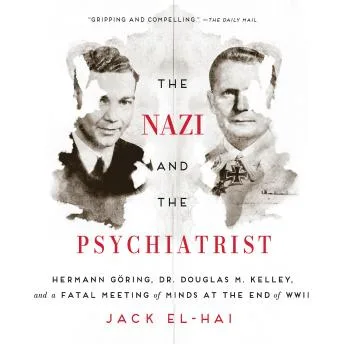
The Nazi and the Psychiatrist: Hermann Göring, Dr. Douglas M. Kelley, and a Fatal Meeting of Minds at the End of WWII
by Jack El-Hai · 8h 53m
Jack El-Hai starts at the end, with an American doctor dying by cyanide in his own house while his wife and children were present, then goes back fifteen years to explain how he got there. Douglas Kelley was a young army captain in 1945 when he was sent to a requisitioned hotel in Luxembourg to judge whether the captured Nazi leadership was sane enough to answer charges at Nuremberg. Hermann Goring arrived with a red hatbox and sixteen pieces of luggage, held court among the fifty-odd prisoners, and submitted cheerfully to inkblot tests. Kelley hoped the examinations would turn up a profile shared by mass murderers, something that would separate them from ordinary people; what he found instead was a collection of ambitious, self-absorbed men who went home to their families at night. The professional intimacy that followed damaged him in ways El-Hai traces through private papers and interviews with his son, and the book argues that the hunt for a Nazi personality was itself a comforting myth.